
A hairline crack, a musty smell, or a sluggish drain rarely seems urgent when you first notice it. But these small signals are often the earliest warnings of problems that can balloon into thousands of dollars in repairs if ignored. Learning to recognize these clues early gives you the power to act before minor issues become major renovations. This guide walks through the most common warning signs around your home and what they usually mean.
Hairline Cracks in Ceilings and Walls
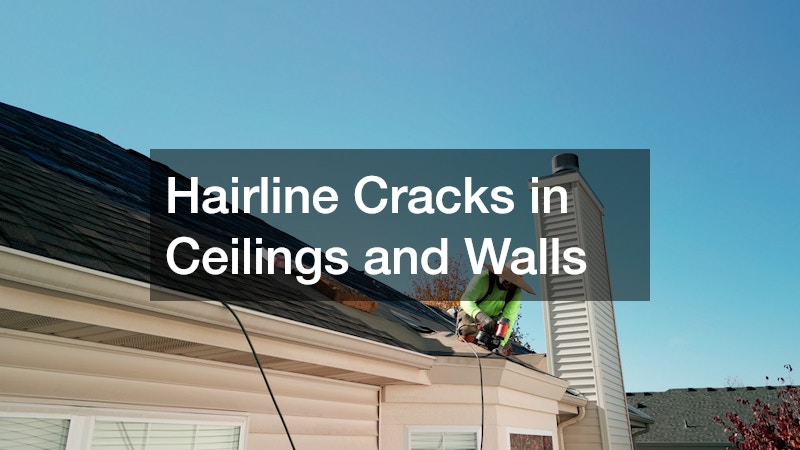
Small cracks that appear near ceiling corners or above door frames are often dismissed as normal settling, but they can point to deeper structural or moisture issues. Hairline cracks under 1/16 inch that stay the same size year after year are usually harmless, the result of a house naturally expanding and contracting with temperature changes. The ones worth worrying about are cracks that grow wider, run diagonally from a corner, or branch off into a spiderweb pattern.
Pay close attention if these cracks appear alongside discoloration, a faint musty smell, or slightly sagging drywall. That combination often signals a roof leak that has been quietly spreading water damage above your head, sometimes for months before it becomes visible. Water can travel several feet along a rafter or truss before it finally shows up as a stain or crack on the ceiling below, so the damage is frequently worse than it first appears.
It’s also worth checking whether cracks cluster around plumbing lines or bathrooms upstairs, since that pattern points to a pipe leak rather than a roof problem, and calls for a different repair approach. Left unaddressed, either issue tends to escalate: what starts as a $200 patch-and-paint job can turn into thousands of dollars in rotted framing, ruined insulation, and mold remediation. In more severe cases, prolonged moisture exposure compromises the decking and shingles enough that a full roof replacement becomes the only real fix, rather than a simple patch job.
Pay attention to the pattern of the cracking as much as its size. Cracks that run diagonally from corners or reappear after painting over them are more concerning than a single straight hairline crack.
Diagonal cracks radiating from door frames or window corners often signal foundation settling or structural stress, especially if they’re wider than a credit card’s thickness (about 1/16 inch) or continue growing over several months. A crack that keeps coming back within weeks of being patched is telling you the underlying movement hasn’t stopped, which means cosmetic fixes are just wasting money until the real cause is addressed.
Location matters too. Cracks near ceiling-to-wall joints can point to roof or truss issues, while stair-step cracks in brick or drywall along a stairway pattern often indicate foundation shifting. If you notice a crack alongside other clues — doors that stick, uneven floors, or gaps around window frames — it’s worth having a structural engineer take a look before the damage spreads further and turns a $300 repair into a $10,000 foundation job.
- Cracks wider than a quarter inch (about the thickness of a credit card edge) deserve professional inspection, since gaps beyond this size often signal structural movement rather than normal settling
- Discoloration around a crack—yellow, brown, or gray staining—suggests moisture is involved and should never be simply painted over
- Cracks that grow after heavy rain point to roof or gutter issues, especially if they appear near ceiling corners or top-floor walls
- Multiple cracks in the same room, particularly diagonal ones near doors and windows, can indicate foundation movement
- Stair-step cracks in drywall corners or above doorframes often mean the frame itself is shifting
- A crack that reappears within weeks of patching usually signals an ongoing issue, not a one-time settling event
Musty Odors Near Basements and Crawl Spaces
A persistent musty smell is one of the clearest early indicators of hidden moisture, and moisture left unchecked leads to mold, wood rot, and structural decay. Many homeowners notice the odor long before they see any visible water, which is exactly why it should never be ignored. If your basement floods occasionally or stays damp after storms, a malfunctioning or aging system may be to blame.
In many cases, the culprit is a failing sump pump that can no longer keep pace with groundwater intrusion. Scheduling a sump pump replacement before the rainy season hits can prevent thousands of dollars in water damage to flooring, drywall, and stored belongings.
Slow Drains and Unexplained Water Stains

Slow-draining sinks or tubs are frequently brushed off as minor annoyances, but they can signal plumbing problems that worsen quickly. A drain that empties sluggishly often means a partial clog forming from grease, hair, or mineral buildup, and left alone, that clog can trap water against pipe joints and seals that were never designed for constant moisture exposure. What starts as a 30-second delay draining a sink can, within months, become a fully blocked line or a slow leak at a failing joint.
Combined with water stains on ceilings or walls near bathrooms and kitchens, this pattern often points to a leak building pressure somewhere in the system. Yellow-brown rings, bubbling paint, or soft spots in drywall are especially telling because they usually mean water has already been present long enough to soak through multiple layers of material. Stains that reappear after painting over them are a strong sign the source hasn’t been fixed, only hidden.
The longer a leak goes undetected, the more damage it does to subflooring, insulation, and framing. Wood framing exposed to sustained moisture can start losing structural integrity in as little as a few weeks, and wet insulation loses most of its effectiveness while also becoming a breeding ground for mold. By the time a stain is visible on a ceiling, there’s a good chance the leak has been active for weeks or months, meaning repair costs can climb from a simple $150 pipe fix to several thousand dollars in drywall, flooring, and mold remediation.
If you notice both slow drains and staining at the same time, it’s worth calling a plumber for a camera inspection rather than waiting to see if the problem resolves itself. Catching a leak while it’s still confined to a single pipe joint is dramatically cheaper than replacing rotted framing or moldy subfloor later on.
Slow drains rarely fix themselves, and ignoring them lets small clogs turn into bigger problems. A sink that empties sluggishly or a shower that pools around your feet often signals buildup deep in the pipe, tree roots infiltrating a sewer line, or a failing vent stack. Left alone, that backup can eventually force wastewater back into your home, turning a $150 drain cleaning into thousands of dollars in flooring, drywall, and sanitation repairs.
Water stains deserve the same urgency, even if they look faint. A yellowish-brown ring on a ceiling or a damp patch on a wall usually means water has already been traveling through your structure for some time. By the time you can see it, there’s a good chance insulation, framing, or subflooring nearby is already saturated and breeding mold.
Age matters too. Water heaters typically last 8-12 years, and supply lines and washing machine hoses degrade well before that, often without any visible warning. Older plumbing fixtures and tanks are far more likely to fail suddenly, and a sudden failure is always more expensive than a planned fix — a burst water heater tank alone can release 40-50 gallons in minutes, enough to damage flooring across an entire room. Replacing an aging fixture on your own schedule costs a fraction of what an emergency call and water restoration crew will run.
- Water stains that grow in size week to week, or develop a yellowish ring, indicate an active leak rather than a one-time spill
- Ceiling stains near upstairs bathrooms often trace back to a slow supply line or wax ring failure, not just condensation
- Rusty or discolored water, especially when it only happens on the hot side, can mean an aging tank is corroding internally
- A puddle or damp flooring near a tank is a clear sign a water heater replacement is overdue, since tanks rarely leak until the internal lining has failed
- Slow drains that gurgle or back up in multiple fixtures at once suggest a main line clog, not just one dirty trap
- Reduced hot water pressure, or water that cools faster than it used to, often precedes a full tank failure within weeks
Rising Energy Bills Without a Clear Cause
When your utility bills climb steadily without a change in usage habits, your home is likely losing energy somewhere you cannot see. Drafty rooms, inconsistent indoor temperatures, and condensation between glass panes are all subtle signs pointing to failing seals. These issues often trace back to windows that have lost their insulating properties over time.
Older single-pane or poorly sealed windows force heating and cooling systems to work much harder, which shortens their lifespan and increases repair frequency. A window replacement is often the fix that finally stabilizes energy costs, even though the upfront cost can feel significant compared to simply running the thermostat a little longer each season.
- Foggy glass between panes means the seal has failed
- Drafts near closed windows suggest frame or weatherstripping damage
- Higher bills in the same season year over year point to worsening efficiency
- Difficulty opening or closing a window can indicate frame warping
Strange Noises or Weak Airflow From Cooling Systems

An air conditioning system rarely fails without warning. Grinding noises, weak airflow, or a unit that runs constantly without cooling the home effectively are all early red flags. Ignoring these symptoms often leads to a complete system breakdown during the hottest part of the year, when demand for service is highest and costs tend to climb.
Addressing small issues quickly through timely AC repair is almost always cheaper than replacing an entire unit. A technician can often diagnose refrigerant leaks, worn belts, or failing capacitors before they cause a total shutdown, saving both money and comfort.
Cracked or Sunken Sections of Outdoor Pavement
Outdoor concrete and asphalt surfaces take a beating from weather, vehicle weight, and shifting soil, and small cracks are often the first visible sign of trouble. Water that seeps into these cracks freezes and expands during colder months, widening the damage with each cycle. What starts as a cosmetic issue can quickly undermine the structural integrity of the surface.
Sunken or uneven sections are particularly telling, since they usually indicate erosion or poor drainage happening underneath. Waiting too long often means the difference between a simple patch and a full driveway replacement, which costs significantly more once the base layer has been compromised.
- Cracks wider than half an inch typically indicate base failure
- Pooling water on the surface points to drainage problems
- Uneven sections create tripping hazards and liability concerns
- Crumbling edges suggest the material has exceeded its lifespan
Cloudy Water or Rough Surfaces Around Backyard Pools

A backyard pool that develops persistently cloudy water, rough patches along the surface, or visible cracks in the plaster is signaling more than a cosmetic issue. These symptoms often point to failing filtration equipment or structural cracks that allow water to seep into surrounding soil. Left unaddressed, this can destabilize the pool deck and surrounding landscaping.
Booking pool repair at the first sign of trouble is far less costly than waiting until a small crack becomes a major structural failure. Regular attention to water chemistry and equipment performance also extends the life of the entire system, protecting your investment for years to come.
Doors That Stick, Sag, or Fail to Seal Properly
A garage door that struggles to open smoothly, makes grinding noises, or no longer seals tightly against the ground is often showing early signs of spring or track failure. These components endure constant tension and wear, and a small misalignment can quickly turn into a door that falls off its track entirely. Left unresolved, this creates both a safety hazard and an entry point for pests and weather.
In many cases, homeowners wait until the door stops functioning altogether before considering garage door installation, but replacing an aging system proactively is often safer and more cost effective. Newer systems also tend to be better insulated, which helps regulate temperature in attached garages.
Old Structures That Are Costly to Maintain
Not every warning sign points to a repair, sometimes the smartest financial decision is removing a structure entirely. Aging sheds, dilapidated decks, or unstable additions can become money pits if you keep patching them year after year. A professional demolition service can safely clear the way for something new, whether that is a modern addition, a garage, or additional yard space.
Similarly, an old, unsafe, or non-functional fireplace can pose both fire hazards and structural concerns if the chimney has deteriorated. Rather than continuing to invest in a system that no longer meets safety codes, many homeowners choose a full fireplace installation to restore both function and value to the home.
Small warning signs rarely stay small for long, and the cost of ignoring them almost always exceeds the cost of addressing them early. By paying attention to cracks, odors, noises, and rising bills, you give yourself the chance to fix problems while they are still manageable. The next time something in your home seems slightly off, treat it as valuable information rather than a minor inconvenience. Taking action now can save you from a far more expensive repair down the road.